I installed Morel speakers throughout my car along with two Pioneer amps. For the 12-inch Dayton Ultimax II subwoofer, I built a ported enclosure and an active subsonic filter.
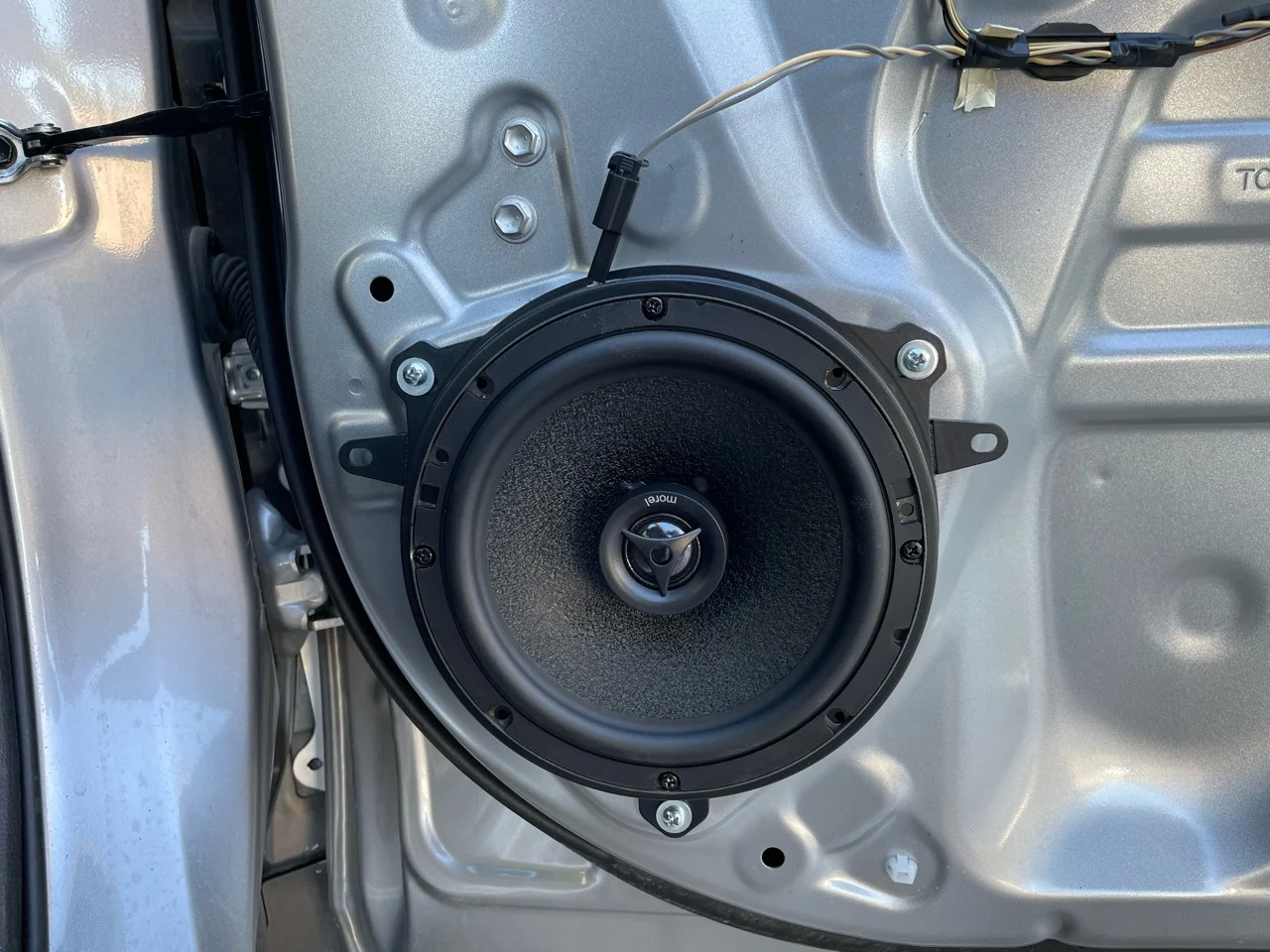
I wanted better sound in the car. I installed Morel speakers all around and two Pioneer amps. Here’s one of the doors with the trim off, when you can still see how the speaker fits.
A Morel speaker mounted in the door. The black adapter sits between the speaker frame and the door metal, with the wiring above it.
The Pioneer amp I chose for the subwoofer had no subsonic filter. With a ported box, I wanted to roll off the signal below its tuning frequency. That sent me back to the bench to make the filter, and then to build a signal generator so I could see how the filter behaved.
Looking at the front of the enclosure, all you see is a narrow slot beside the driver. The part I needed for the acoustic model was the length of the passage behind it. In the Fusion drawing, I could trace its centerline down one wall and around the bend at the back. It came to about 85 cm.
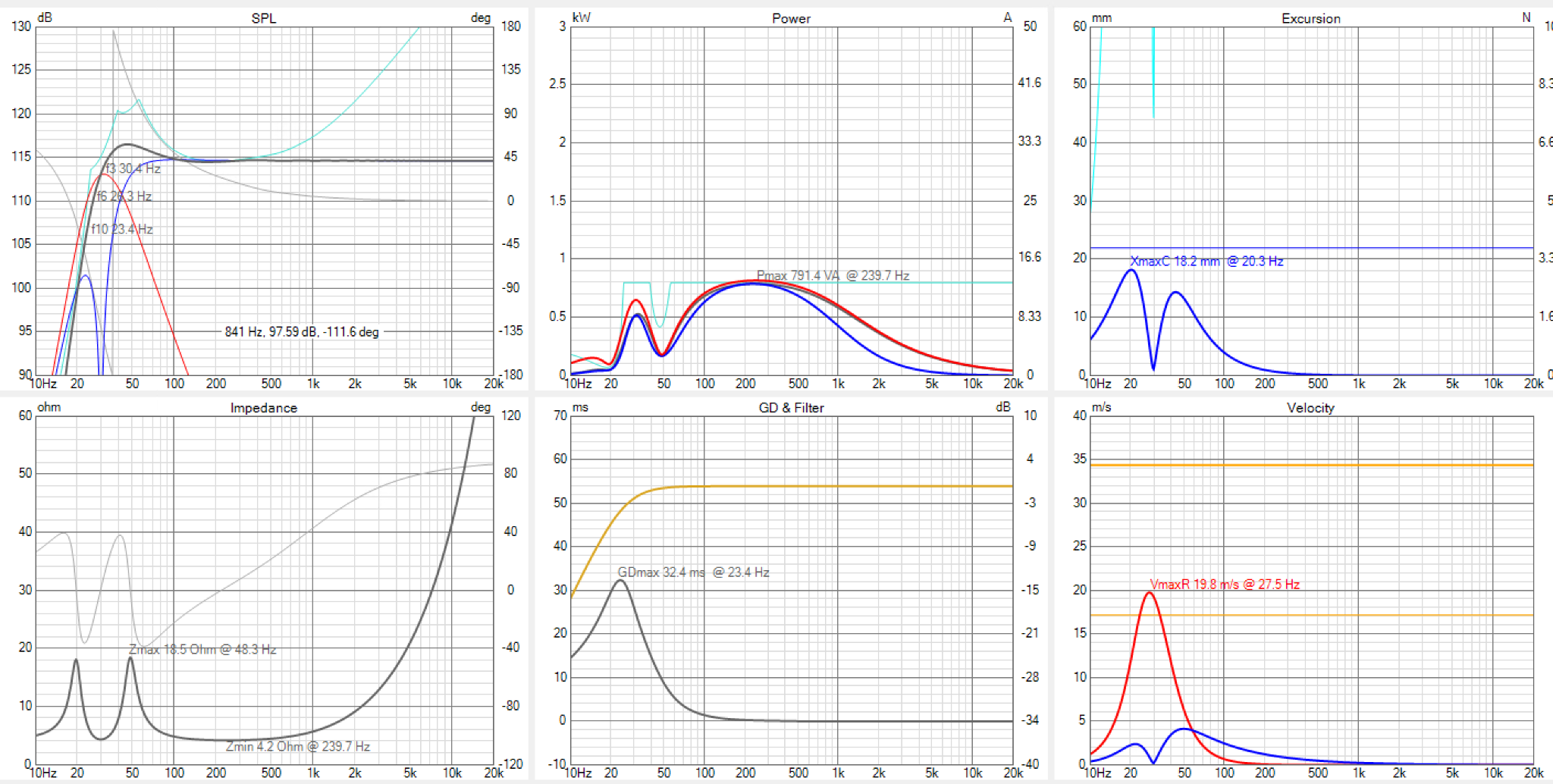
I gave VituixCAD that length, a port area of 187 cm², and an estimated 65 liters of space inside the box after accounting for displacement. The model put the tuning near 30 Hz. I also checked the Dayton’s mounting drawing against the baffle. The frame had to clear the slot, and there had to be room for the magnet behind it.
VituixCAD’s enclosure model. The upper-right plot shows cone travel and the lower-right plot shows air speed through the port.
I wanted to know how far the cone would move below the box’s tuning frequency. With a high-pass filter in the model, cone travel peaked at 18.2 mm at 20.3 Hz. That’s below the driver’s 22 mm limit.
After working through the enclosure model, it was time to lay it out on the panels. The front needed room for the driver and the narrow slot beside it, with the rest of the port tucked inside the box.
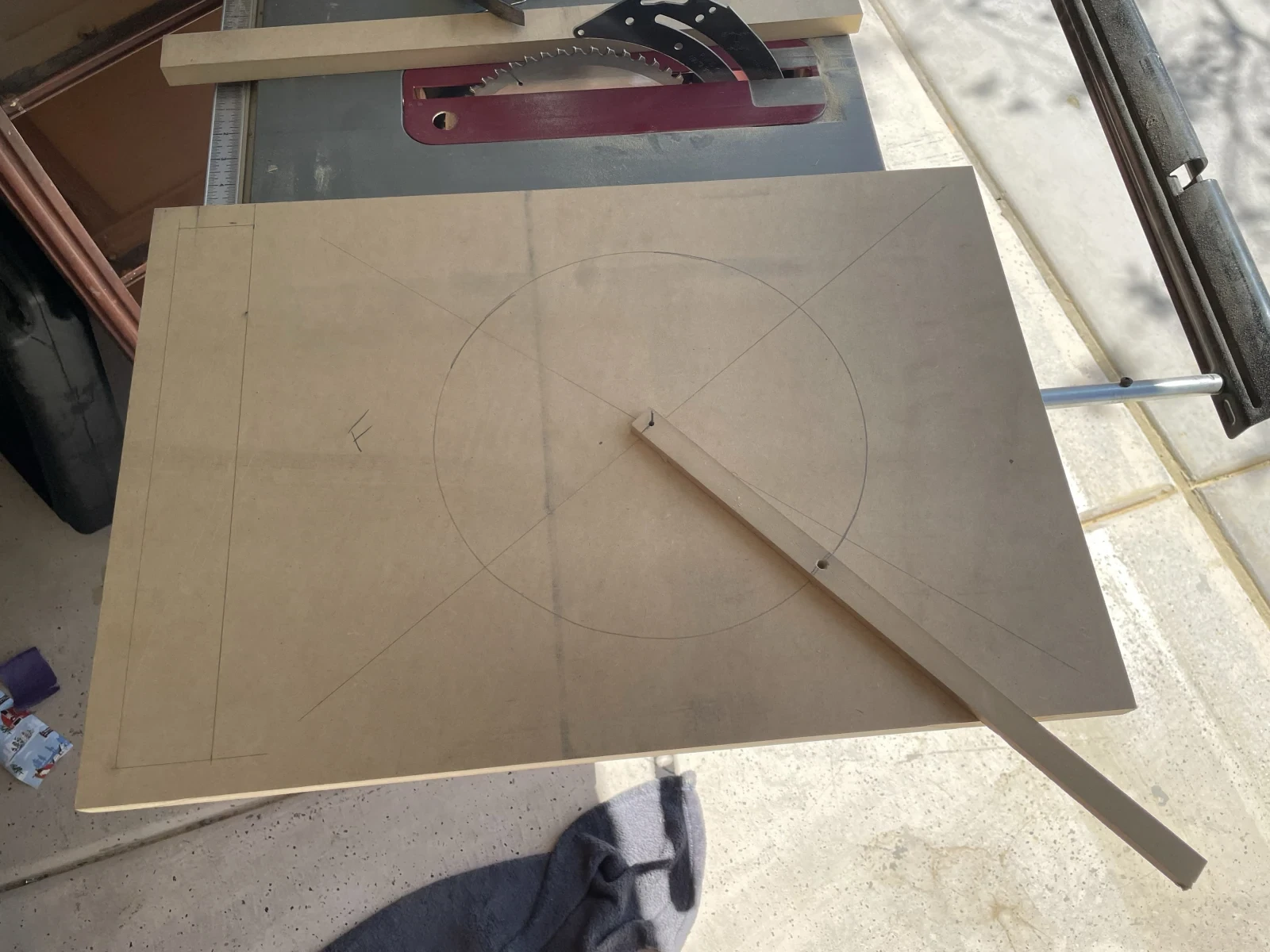
To draw the circle for the driver cutout, I made a compass from a scrap of wood and a nail. When I don’t have the perfect tool, I make something that works.
My scrap-wood compass pinned at the center of the driver cutout, with the slot port marked on the left.
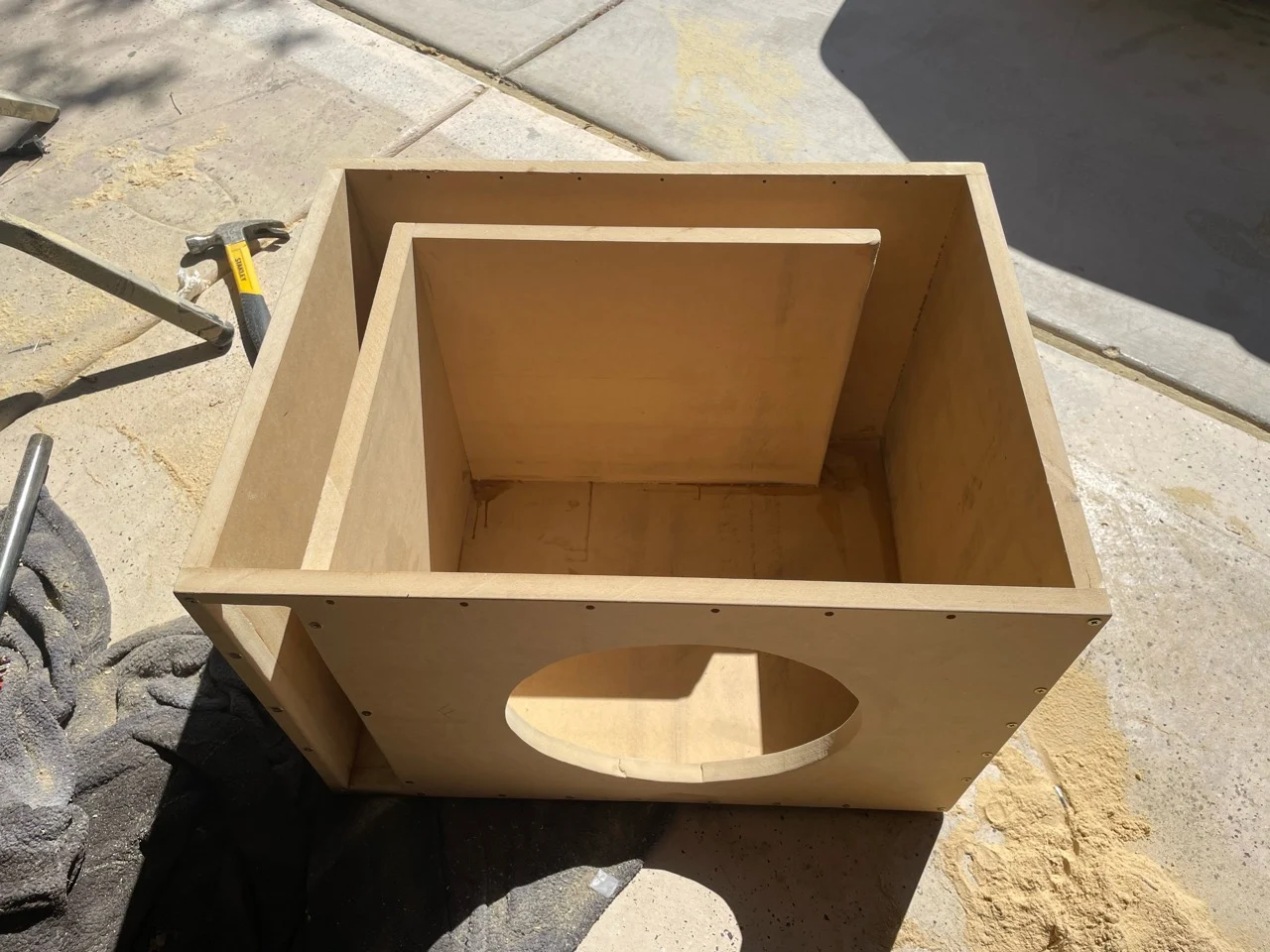
This open-top photo makes the port much easier to explain. You can follow it from the opening on the left, down the side of the box, and around the back. That whole path is what we were working out in the enclosure model.
Before the top went on, the folded port was easy to see.
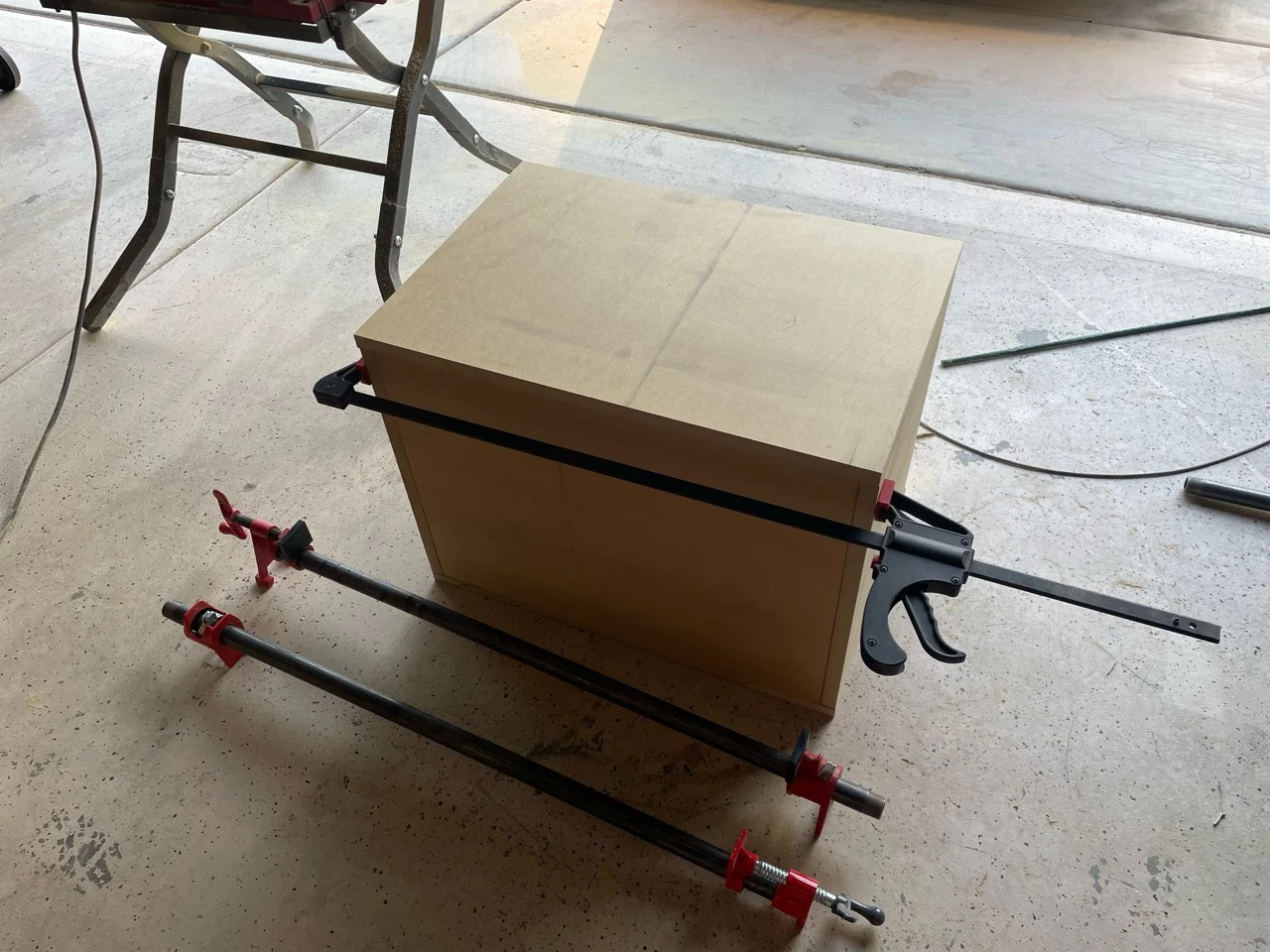
Then the top went on and the clamps came out. Once the box is closed, that whole internal path is hidden away.
The enclosure held together with bar and pipe clamps.
Once the box was together, I mounted the 12-inch Dayton Ultimax II beside the slot. With the driver in place, only the opening at the front gives away how much of the box the port takes up.